Jim Bob requested 3.78 dollars for “water I bought you.” Jeffrey Smith requested 1.09 dollars for “two sips of my coffee.” With the rise of seamless payment platforms such as CashApp and Venmo, notifications like these have become increasingly prevalent. On the surface, these apps may seem convenient and harmless, but as we constantly request and send money, we turn our backs to the idea of a favor. Over-transactionalizing our relationships is ultimately destructive to our ability to live in the moment and make things up to one another over time, thus hindering the development of healthy relationships.
Dictionary.com defines a favor as “something done or granted out of goodwill, rather than from justice or for remuneration.” Hyperfixating on evening debts among friends and transactionalizing every action sends the message that one is acting for personal gain, rather than out of care and selflessness. It reduces the concept of a friendship to being even instead of supporting each other. As Boston Latin School AP Economics teacher Mr. Patrick Boor argues, “It really depends on the cost of the good […] and the dynamics at play between the friend group in terms of socioeconomics. […] But I do think a genuine part of friendship is you give without the expectation of anything in return.”
Indeed, relationships shouldn’t be a scale that needs to be balanced at every moment. Constantly turning to mobile payment apps may be satisfying and easy in the short term, but it hinders genuine care and effort in the long term. A payment doesn’t account for the time a person puts into their actions, and it objectifies kindness, reimbursing it with just the click of a button. Payment apps prioritize checking off a box on a to-do list (repay John Doe) rather than putting in effort for repaying kindness. Ramona Fix (III) shares that these transactional instincts “normaliz[e] […] just getting rid of something without actually having a tangible understanding [of repercussions].”
On the other hand, favors show commitment to the relationship in the long run. They highlight genuine understanding of the other person that you’re able to reimburse them with something they enjoy.
Favors additionally level the playing field; paying people back is a very tricky dynamic, whether you’re on the giving or receiving end. Some people may be embarrassed to ask for monetary compensation, in fear of seeming financially disadvantaged, while others might feel obligated to pay someone back even though they turned down the offer. This sort of dynamic can get in the way of genuine relationships. The favor allows people to pull their weight without this added financial and social stress.
There are undoubtedly many situations in which it makes a lot of sense to turn to payment apps, such as group dinners or different financial backgrounds. According to the Pew Research Center, 61 percent of people who have ever used payment apps say a major reason for doing so is because it streamlines payment. At the end of the day, however, the normalization and spread of these ideals can penetrate bonds, convincing people that their relationships are not worth as much as they truly are.
A money-driven mindset also reflects underlying issues of trust and reliance in a relationship. People seem to think that these immediate payments are preferable because they would rather pay each other, perhaps out of obligation, as soon as possible, rather than face the risks of a more gradual reimbursement. People, instead, ought to build healthier relationships and to do so, they need to understand that physical payments are not always the answer. In many cases, they devalue the moment. Sophia Ho (IV) shares that immediately turning to money makes experiences “feel like a job […] But if I pay for your food [at a later time], then it feels more […] comfortable.” Friendship is about everyone pulling their weight and feeling that their effort is reciprocated, but this effort means nothing when it is constantly objectified by physical payments. In a way, constantly needing to even out says that one does not trust in the prospect of a future interaction enough to wait until then to be reimbursed.
As we navigate such a digitalized and monetized world, it is important that we do not forget the true value of human connection. Instead of hyperfixating on keeping the scale of friendship perfectly balanced at every moment, let’s embrace the imperfection of life and the complexity of relationships in order to truly act as a community. Do the world a favor and put down the payment request; keep tipping the scale of friendship back and forth with your unique acts of care.
Categories:
Do Me a Favor
June 27, 2026
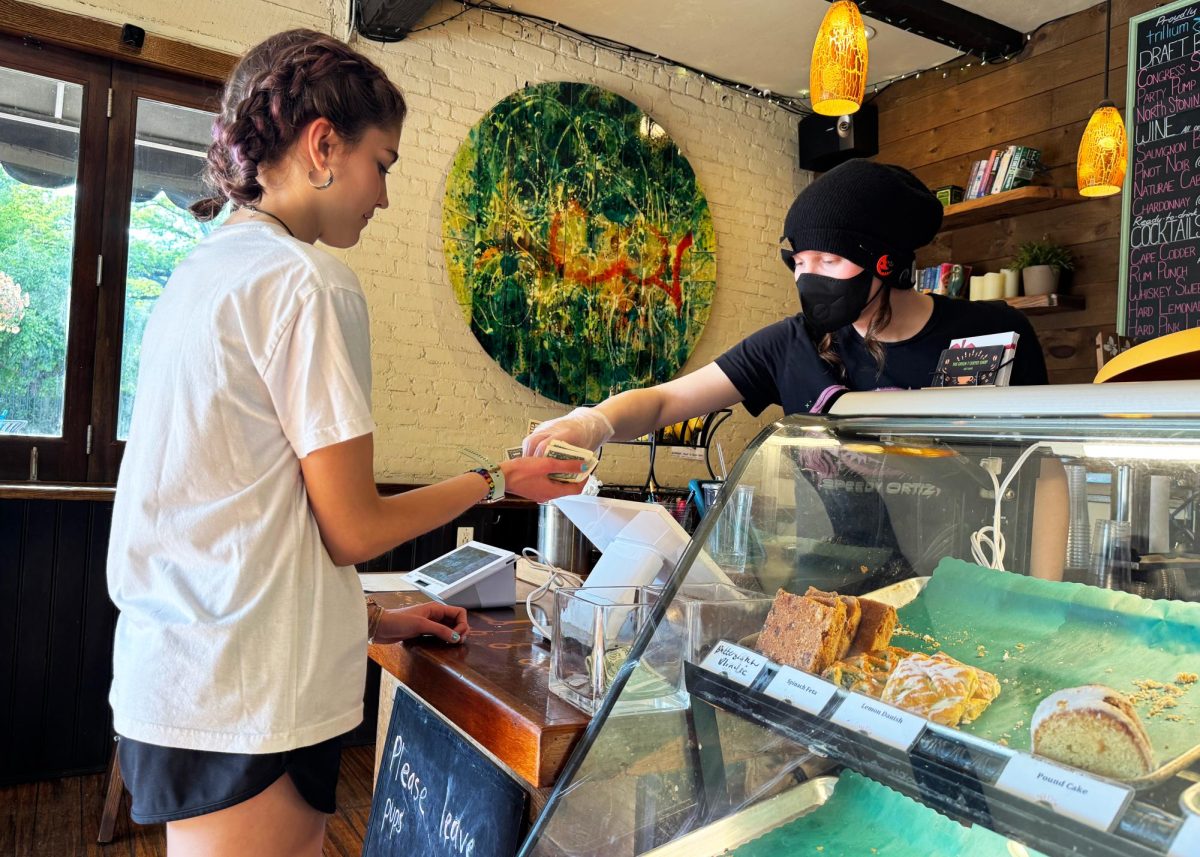
Scarlett Scharfenberg (IV) pays for food at a cafe. (Source: Abby Wilson (IV))
More to Discover