“HANTAVIRUS: The Next Covid.” If you’ve spent any time on social media recently, you may have stumbled upon alarming headlines similar to this one. Fortunately, experts say there is little reason to panic, as there is a slim chance that we will have to go through another pandemic any time soon. This is due to hantavirus being a zoonotic virus — transmissible between animals and humans; human-to-human spread only happens through prolonged close contact with the infected. The mass panic, however, reveals a collective post-COVID-19 trauma.
This sudden obsession with hantavirus reflects paranoia stemming from experiences during the COVID-19 era. For a generation whose formative years were spent in pajamas and social isolation, living through the pandemic has made us cautious, almost to a fault. Mason Finn (V) points out that in our post-pandemic society, “we’ve been very hypervigilant about viruses and diseases.” Since many in 2020 did not take COVID-19 seriously, people have adopted a tendency to panic over every new headline. COVID-19 was certainly a prominent event, especially for many middle and high school students, but it should not dictate how we perceive every new headline or news story about a viral outbreak or disease.
Social media has undeniably exacerbated the discourse surrounding the virus. Viral social media videos have included similarities between COVID-19 and hantavirus and have drawn attention to its origins on a cruise ship. Many have pointed to the virus’s high mortality rate as a sign to panic, though these creators almost always lack medical or professional backgrounds, only alarming the general public.
Hantavirus, despite its mortality rate, lacks two major aspects that COVID-19 has: mutability and transmissibility. COVID-19 spread like a wildfire because it was a highly transmissible airborne pathogen between humans even after brief contact. It also mutated into thousands of variants extremely quickly that individually contributed to the high number of infected people. Hantavirus, on the other hand, has minimal risk of spreading so quickly due to its zoonotic nature. It additionally mutates incredibly slowly, making a sudden shift to high transmissibility improbable. What many are calling the disease that will cause the next pandemic is not nearly contagious enough to pose such a threat.
Millions have nevertheless voiced the same concern: why aren’t we taking this seriously? Did we learn nothing from the last pandemic? The truth is, we did. Boston Latin School science teacher Ms. Paula Guzman explains, “[O]ne thing that we learned was that it’s really important for everybody […] to try to be more conscientious of it, […] not going into spaces where you’re gonna spread [sickness], wearing a mask, that sort of thing.”
COVID-19 has also taught us the danger of misinformation. During the COVID-19 era, online lies and conspiracy theories fueled a vaccine hesitancy movement and even the belief that 5G mobile networks were making people sick. This made it more difficult for the government to manage the disease, since many people did not want to vaccinate or wear masks, resulting in the increased spread and casualties of the disease.
COVID-19 was undeniably significant, disrupting normal rhythms of work and school and killing millions. One pandemic, however, does not mean that an outbreak on a cruise ship will become another one. Social media may sensationalize it for content engagement, but the facts point to a low chance of another pandemic. What we should acknowledge, however, is that our society is not over COVID-19. Though the lockdown has long since ended, many still live with the fear that it could happen again. The Pandemic, however, forced innovation and prepared the world to handle other pandemics. Sylvie Langhirt (IV) concludes, “I think because COVID-19 has kind of primed us when it comes to like pandemic responses and responses to viruses, especially because it happened still so recently. […] I think we’re kind of more ready for hantavirus than we would have been if COVID-19 did not happen.”
Categories:
Another Possible Pandemic?
June 27, 2026
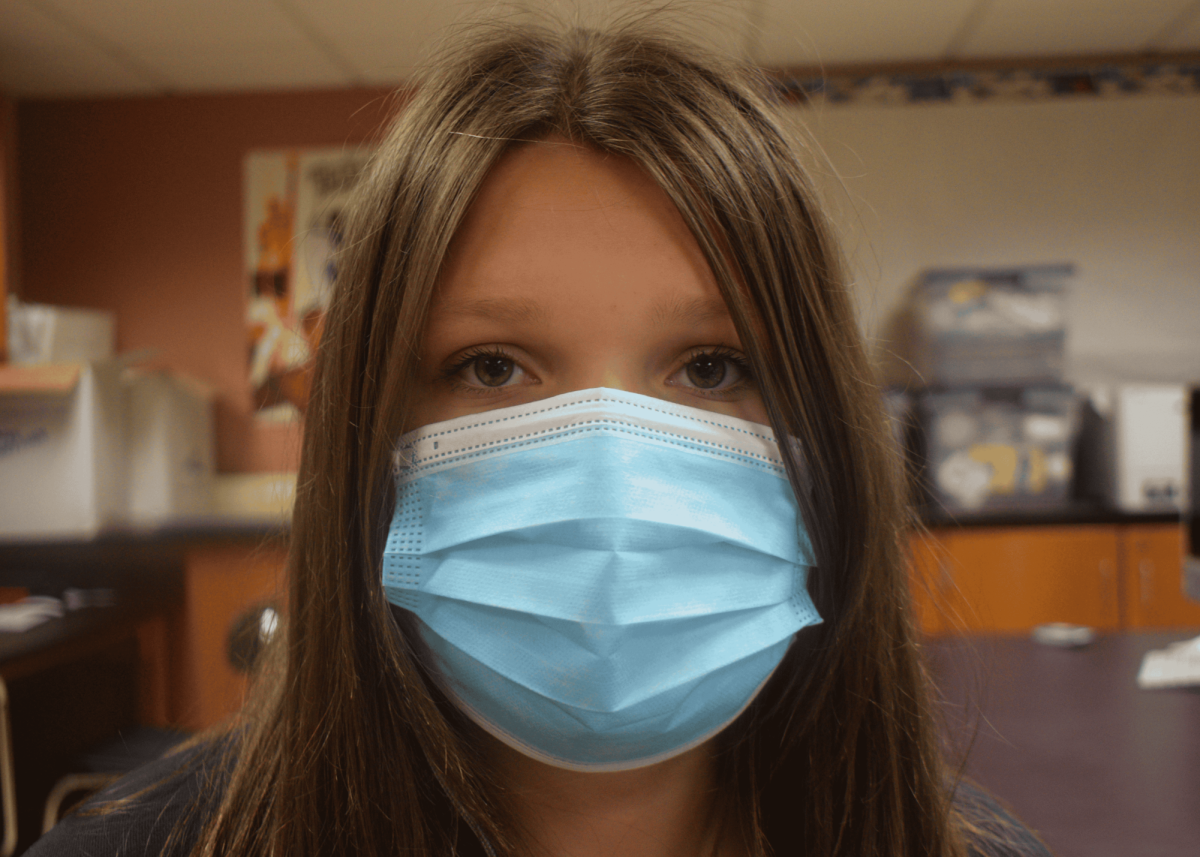
Sophia Krohn (IV) wears a mask for protection against hantavirus. (Source: Julianne Jang (III))
More to Discover