
Have you noticed more talk about increasing rent prices and housing costs in Boston lately? It is not your imagination: in fact, a study from last year suggests that rent in Boston, on average, now exceeds even New York City. Many, unfortunately, can no longer afford to live in Boston. While Mayor Michelle Wu and her administration have taken measures to designate and build more affordable housing in the city, estimates show that thousands more homes are needed. Many of the units being built only offer one or two bedrooms, which is perfect for students or seniors, but not for larger families. To create better outcomes for the children of these families, Boston should build more affordable, family-friendly housing.
One obvious silver lining of having larger and more family-friendly affordable housing is that more families will be able to live within the city together. This will allow for greater access to resources like jobs, public schools and libraries. Families will also have access to the city’s public transportation system, decreasing the environmental impact and financial expense of driving.
Efforts to build and prioritize affordable housing that is more accommodating for families will benefit children in low-income households. It lowers the risk of children becoming homeless, which prevents detrimental effects on their education. Children without stable housing are more likely to repeat grades, drop out of school and have a lowered performance overall compared to their peers.
Newly-constructed, family-focused affordable housing also allows families to live in better conditions. In an older city like Boston, high concentrations of lead and other heavy metals can often be found in lower-quality housing. Often in paint and water sources, it can create significant health problems in children. Even low levels of lead can have adverse effects on learning and intellectual development. Lower-quality housing is also shown to create a higher risk of asthma. The lack of quality and affordable housing leads families to pay more for housing, oftentimes forcing them to go without necessities such as food.
Building more housing and increasing density will bring both jobs and increased tax revenue into the area, helping more than just the residents. The increase in revenue would improve the community as well. Boston Latin School history teacher Mr. Nicholas Fogel agrees, saying, “[Greater housing density] will lead to a more diverse neighborhood; […] more people will be able to afford to live there; that will lead to more customers for businesses [and] a more vibrant neighborhood.”
Since there are many benefits to building affordable housing, some might wonder why this is not happening on a larger scale. The answer: bureaucracy. Developers and directors must go through an arduous process to build in Boston. Catherine Infantino is a project manager for New Atlantic Development, a mission-based housing developer, and she expresses concern about how difficult it is to make visible progress: “Let’s just say we just built 74 units in Nubian Square that we opened about a year ago; it took eight years to build, and it’s not just the building. It’s usually the funding process.”
Some colleges have also contributed to these challenges. Northeastern University, for instance, has historically had limited space to house all of its students, adding pressure to off-campus housing and increasing the demand for affordable housing closer to their campus. Despite the college’s efforts to build more dorms, controversies have arisen in the communities they build in. Since the university often builds on vacant lots with a history of conflicts over building plans, some communities, like Roxbury and Allston, have complained about their decision to build housing exclusively for their students. Critics, however, have proposed a solution: colleges, like Northeastern, can work with communities to house families as well, rather than building housing purely for their students. This could help many families in need while also providing students with housing off-campus.
Boston will continue to build affordable housing, and this issue must be a high priority. It is crucial to ensure that large families receive the space to accommodate their physiological needs. Making a difference in this complex, multi-layered issue may seem difficult, but Simon Chen (I), co-president of BLS Voices of the Empowered offers some advice: “Learning […] the subtleties behind how houses can be built […] will go a long way in fostering good discussions.” An actionable way to make progress is by sending letters to public officials urging them to address housing policy issues. On a larger level, one step to improving this problem is making it easier to build larger housing units. Everyone deserves a place to live, and Boston should support that.
Categories:
Build, Boston, Build
May 5, 2026
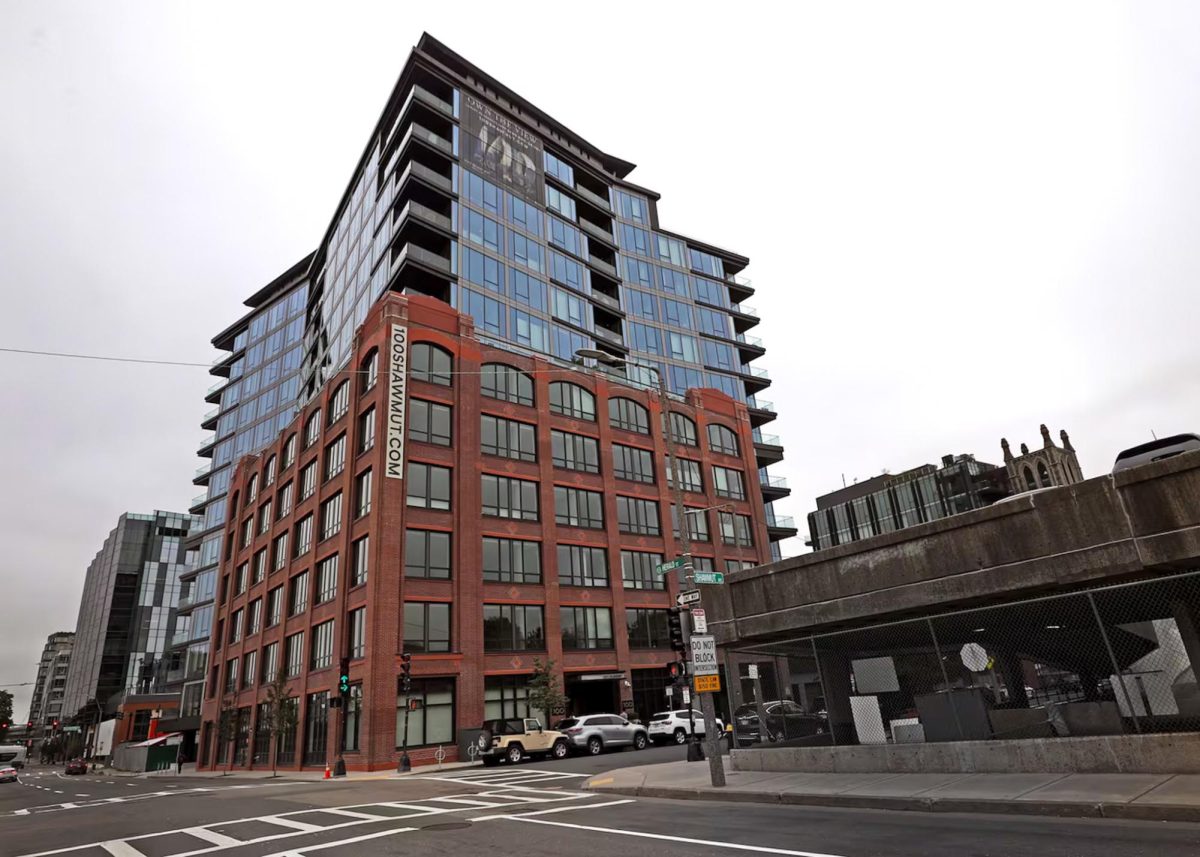
100 Shawmut Avenue in the South End offers several units for sale. (Source: David L. Ryan)
More to Discover