It is June 24. The thermostat in your science classroom reads 82 degrees, and the humid, sultry air sticks to your skin. The Boston Public Schools district has traditionally started school on the Thursday right after Labor Day; students dread the day summer break ends and the grind restarts. This schedule allows BPS students to have approximately a two-month summer break to de-stress from school. Students are able to go on vacation or work summer jobs. This tradition nevertheless takes more than it gives back. BPS should instead start school before Labor Day.
Most apparently, starting school earlier allows summer to start earlier as well. This is especially important for snow days. This school year, for example, has had many snow days, causing the last day of school to fall on June 26. With the current schedule, if more closure days occur than there are makeup days in June, then BPS will have to shorten April break to compensate for time lost from school. Starting earlier ensures ample time to accommodate for sudden closures while keeping students’ breaks intact. Boston Latin School Registrar Mr. James Lane agrees, saying, “Having that cushion is a big deal, so that you don’t have your other holidays […] impacted.”
Besides cold weather, students additionally will have to sit through less summer heat if the year ends earlier. Not all schools in the BPS district have air conditioning, meaning that some students have to attend school while enduring hot temperatures. These conditions may lower their focus in class and increase absences because students are attempting to escape the heat.
This shift could also allow for more optimal AP preparation. The AP exam dates are fixed, so starting school earlier would offer students more time to prepare. Students would feel less rushed while preparing for their exams with more review time. Teachers would not feel nearly as pressed for time and could teach their course more thoroughly. Students’ understanding of the material may improve, keeping them on track or exceeding expectations for AP exams.
Restructuring the academic calendar to conclude shortly after AP exams could eliminate the inevitable drift that plagues the final weeks of the school year. For seniors, who often have more AP-heavy schedules, this means they can have their last day of school earlier. For those remaining, students shift to less intense work while waiting for the school year to end, as their course winds down. They can sort out their logistical details during this time and potentially graduate earlier, leading to a longer summer.
Aside from the classroom, it allows for less interference with national competitions occurring outside of BPS that also have fixed dates. One prime example is the National Speech and Debate tournament that usually happens during BPS students’ finals week, forcing attending students to take their final exams early. Students should be able to perform well at competitions while simultaneously having ample time to study for exams. With this new schedule, their calendars would not be so strained.
Some may raise concerns that starting school before Labor Day interferes with late summer plans and disrupts students’ rest time. Indeed, BLS McCarthy Institute Director Ms. Rose Delorme-Metayer argues, “I don’t think it gives young people enough physical rest time […] [and] time to be teenagers. I think it’s so important that young people get summers.”
This change, however, would just shift plans earlier. Many teen summer programs run until the last week of August. Even assuming the worst case, where school starts immediately after August, employers understand that they are hiring students. Employers that engage specifically with BPS students, like those in the Private Industry Council or FutureBOS, are likely to shift accordingly with the BPS schedule, resulting in little negative impact.
Summer travels are also planned in advance most of the time, so families knowing that school is starting earlier can push their vacation forwards without having to cut it short. An earlier summer also means that students get to de-stress from school sooner. Students would still have about the same amount of time for break.
Finally, an earlier start would bring a smoother transition into the school year. At BLS, the first four days of school have extended homeroom for Measures of Academic Progress testing and scheduling is split into two separate weeks. If BPS started before Labor Day, the School could get through the administrative details all done and out of the way, leaving the week after to be a full and smooth transition to regular school. Nikole Rey Ladino (III), who has younger siblings in BPS, notes, “The first few days are just tight scheduling, […] but I think starting before Labor Day […] would help because things would get done much more quickly.”
While the initial change to an earlier school year may feel overwhelming, especially for younger BPS students, students might as well rip off the BandAid earlier. Starting before Labor Day gives everyone more flexibility and time for schoolwork and testing. It’s more comfortable too! After all, does anyone actually want to walk out of the Schola Latina Bostoniensis gate dripping with sweat?
Categories:
Lock In Before Labor Day
May 5, 2026
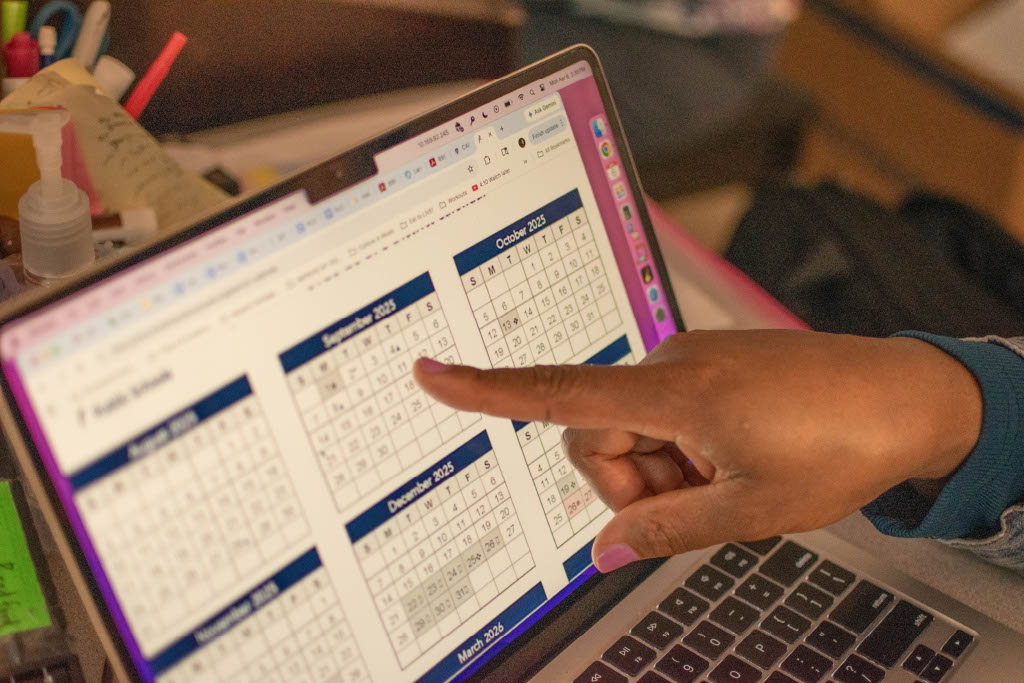
A student makes note of the first day of school before Labor Day. (Source: Djourden’s Durocher (IV))
More to Discover