From neon body suits to cow girl fringe, 30-dollar poke bowls to camping horror stories, Coachella inevitably will pop up on your “For You” page. Launched in 1999 as a rebellious indie rock arts and musical festival, Coachella has evolved into a experimental fashion hub, influencer haven and, of course, a venue of iconic performances. This year, headliners included big names like Justin Bieber, Sabrina Carpenter and Karol G, as well as many special guests such as Madonna, Olivia Rodrigo and Billie Eilish. When stepping back from the performances and music, however, what is the general sentiment and culture of Coachella? Is it really all that?
Each year, Coachella gains major traction based off of their legendary stage performances. This year, Bieber made headlines of his own, with many fans renaming Coachella to “Bieber-chella.” Bieber performed hit songs like “Baby,” “Beauty and a Beat” and even “One Less Lonely Girl” with special guest Billie Eilish. This moment flooded social media feeds, mainly because Eilish is known for her own major “Bieber Fever” from her childhood.
Headliners weren’t the only focal points of the festival. For rising pop diva Slayyyter, her Coachella weekend debut was definitely show-stopping. Singing (and screaming) hits such as “Crank” and “Beat up Chanels,” Slayyyter made waves all over. Her music and energy were simultaneously exotic and energetic, and it was definitely what her fans were looking forward to at this year’s Coachella.
Taking a short break from her tour, artist PinkPantheress was surely a topic of discussion at Coachella. Her hypnotic dance moves and body-shaking beats drew in huge crowds, especially with her performances of popular songs like “Boy’s a Liar” and “Girls Like Me.”
For the millions of viewers watching through a TV screen, it may have seemed like Coachella was a flawless and sun-kissed paradise. But stepping foot into the hot and dry desert, fans might see it in a different way. In 2015, brands came up with a creative and unique way to market their products — Coachella. What began as brands throwing small pool parties and get-togethers quickly morphed into full on marketing schemes. Instead of small billboards and tents, fashion and luxury brands realized that there was a new and fast growing market: influencers. This year, over 30 brands, including Starbucks, Poppi and Neutrogena, sent a total of over one thousand influencers. Posting more than 15 videos per day and more fit-checks than ever seen before, brands received millions of views and interactions off of each attendee. Katie Baide (II) shares, “There were a lot of people who I saw that I did not expect to be at Coachella. […] For example, Molly Faye, who […] goes to Northeastern. […] I was just surprised and just super happy.”
Influencer and celebrity attendance, however, hasn’t always received positive feedback. It is critical that viewers step back from the performance ratings, food reviews and bright outfits for a second and look into what they’re consuming.
The whole idea of influencer marketing and culture challenges the origins of Coachella: a counter-culture movement for indie bands and concert goers. Anjuli Patel (I) notes that “people are going to Coachella less for music, and more for […] the ‘Instagram-ability’ of it all: […] How can I show off the fact that I’m here rather than appreciating art itself.”
Coachella today is no longer just some musical festival but a stage for brands to profit off Gen Z parasocialism and social media trends. This rise in influencer attendance redundancy has removed layers of genuine appreciation, originality and representation of fashion. Sophie Wilson from Dazed Magazine states it perfectly: “Influencer fashion is proof that every moment of our real, living, breathing, partying lives can be optimised for the algorithm. It’s no longer a trend, but a dull cover version that never sounds quite as good as the original.” In a world where media is tailored to conform and market to a capitalist society and brands and giant conglomerates co-opt spaces originally created for individuals to come together, authentic media and art are lost.
Categories:
Losing Coachella
June 27, 2026
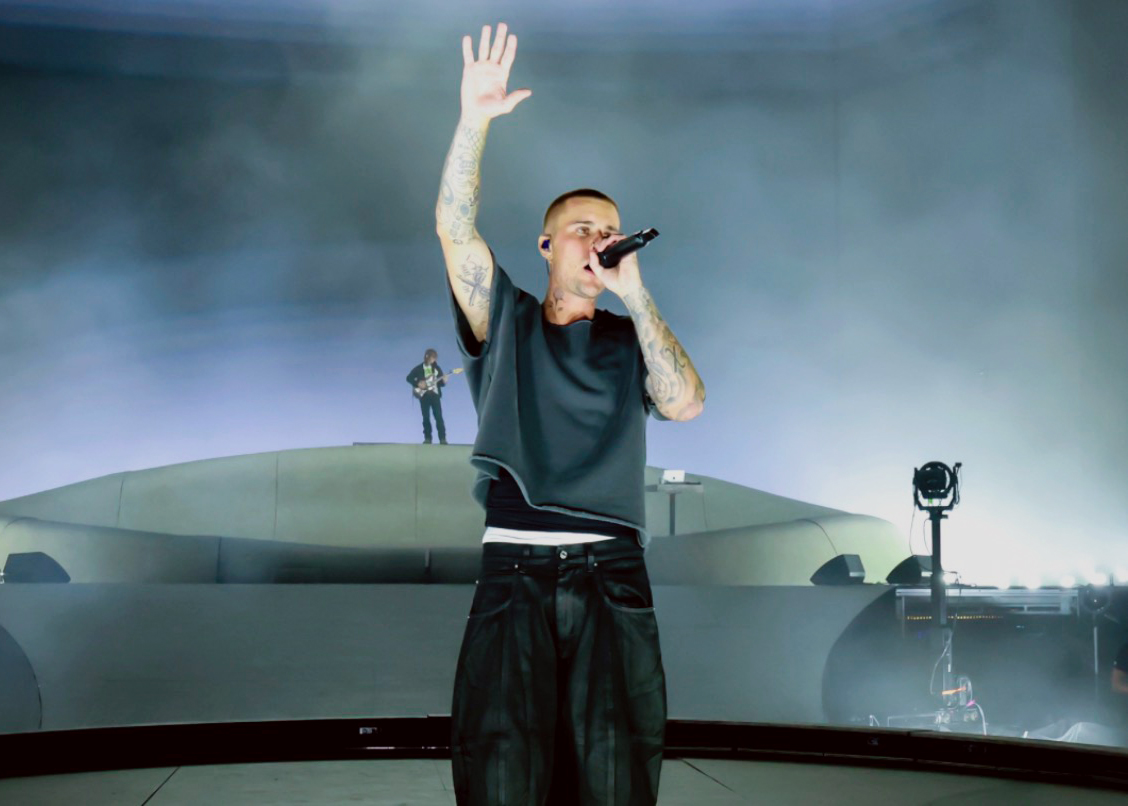
Justin Bieber performs as a headliner at Coachella. (Source: Kevin Mazur)
More to Discover