Each summer, new microtrends arrive and leave as fast as they come. In the summer of 2024, ‘brat’ green and cheetah print were everywhere. In 2025, a surplus of Year 2000 (Y2K) street style fashion, such as low rise jeans, layered jewelry and babydoll tops took over. But are these fads coming and going too quickly?
This year, there have been quite a few microtrends, although the popular capris and ballet flats have yet to make their way to Boston Latin School. This could either be because not many people at school find them appealing or because wearing ballet flats and ¾ pants aren’t that comfortable for the school environment. Around BLS, however, many people are starting to wear flip flops as the weather becomes warmer — an interesting change from previous years, when socks and Birkenstocks were the norm.
Around Boston, wired headphones have been the latest accessory. They tend to go along with tote bags and baggy tees, which all fall under the trending style of the “performative male.” Iris Mahoney (IV) describes other patterns relating to this trend: “Jorts, definitely. Jeans with carabiner-keychains attached, birkenstocks and crocs have shown up in the warm weather.”
The issue with these microtrends is their contribution to fast fashion. Fast fashion chains like Shein, Temu and Zara profit most from these microtrends. Consumers often buy whatever they see others wearing, especially from online influencer promotions, and when each week has a new item or style to purchase, people are likely to keep on buying from these cheap brands.
These chains, furthermore, produce in unhealthy ways. The fast-fashion industry is a massive contributor to water and other material waste, as well as highly damaging carbon emissions. Earth.org writer Rashmila Maiti touches upon the issues with the current industry: “Fast fashion is the second-biggest consumer of water and responsible for about ten percent of global carbon emissions — more than all international flights and maritime shipping combined.”
Many Bostonians are aware of the negative effects of fast fashion and thus have found a way to maintain style while also being sustainable: thrifting.
Thrifting has been on the rise, as it provides a way to find unique pieces without contributing to microtrends. Select Markets have regular markets around Boston with different second-hand vendors. Other popular secondhand stores and markets include Buffalo Exchange, SoWa market and various vintage festivals. The trendy clothes popularized by fast fashion, frequently following the Y2K style, can also be found with better quality, price and impact on the environment at thrift stores.
So what is to come for this summer? A return of jorts for the warm season seems likely, as they have been a recurring trend for the past couple of years. Polka dots continue to dominate the fashion scene, and shoes like Adidas Sambas, Isabel Marant wedges and vintage-inspired sneakers like Onitsuka Tigers are on the rise.
Maxwell Mook (II) comments, “Fashion trends are a never-ending cycle, so I predict that the 2000’s surfer style will be trending this summer. Aeropostale just collaborated with Roxy, bringing that beachy feel back into the mind of the general public.”
Fashion all comes down to a form of expression. Trends and microtrends can be used to connect people in fashion, but it is important to consider the environmental effects of the modern day industry and keep your personal style unique.
Categories:
Microtrends, Mega Impacts
June 29, 2026
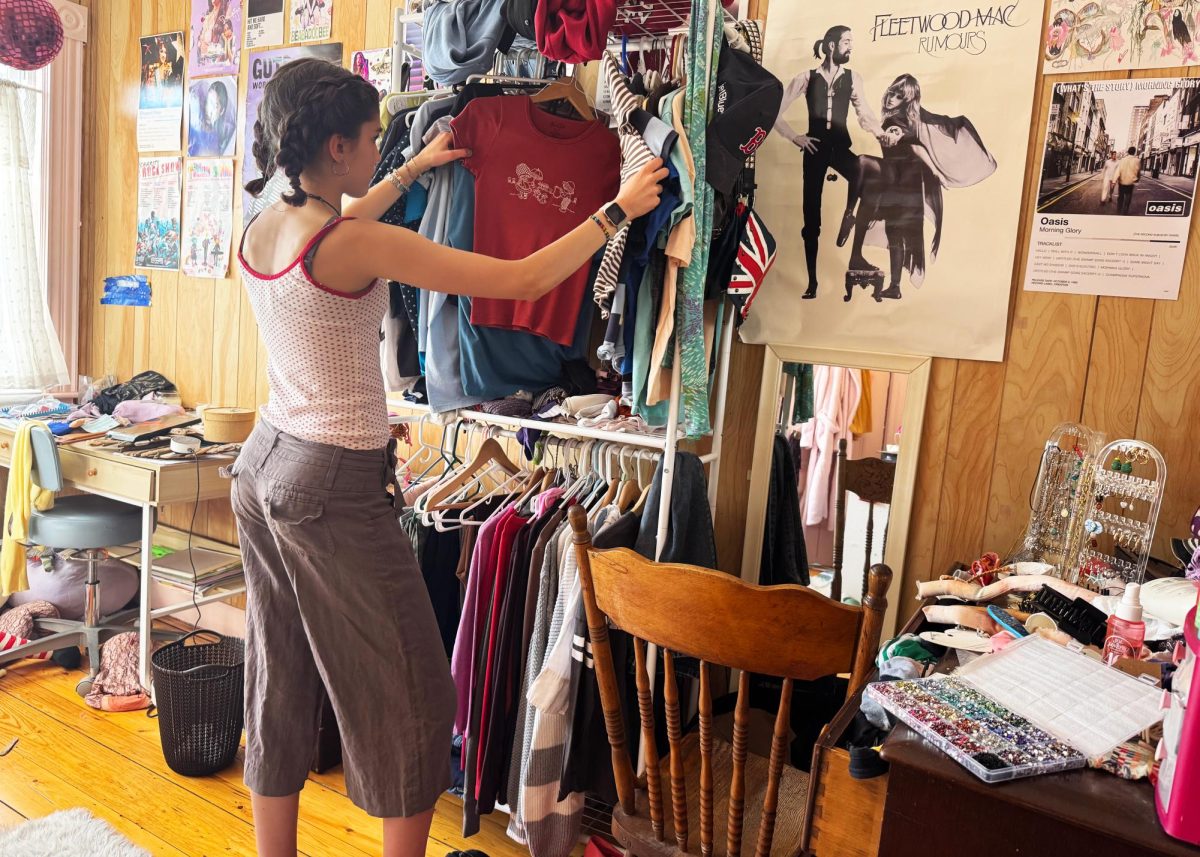
A student looks through clothes while wearing capris and polka dots. (Source: Abby Wilson (IV))
More to Discover