The World Cup is the world’s largest international soccer tournament and the biggest sporting event on the globe. Held every four years, it draws billions of fans, which will only expand as the number of teams increases this year from 32 to 48. This summer, the 2026 tournament will be jointly hosted by the U.S., Canada and Mexico and last from June 11 to July 19. Boston is preparing to host seven of the 104 games, a big opportunity for a sport loving city that rarely hosts international sporting events.
But, is Boston ready? While the World Cup will be exciting for the soccer fans in the city, the tournament might pose some challenges for Boston. Boston Latin School science teacher Mr. John Tobin states, “Hotels and restaurants need all the business that they can get,” but he also expressed reservation, commenting, “Boston is not equipped to host an event like the World Cup. On normal days, traffic is a nightmare, particularly on 93 and 95 South. […] Public transportation is already overwhelmed and underperforming.” As Boston has limited transportation and hospitality options, the arrival of foreign fans and visitors will likely put a strain on city functions.
Boston will need to spend additional money on increased security and cleaning fees during the weeks of the tournament. In addition, Bostonians who wish to watch the game at restaurants may have to pay a higher price for food and drinks because of the rise in demand. BLS English teacher Mr. Aaron Weitz notes the financial burden of such a large sporting event. He says, “I hope that the World Cup will create excitement about soccer in our city and help more young athletes see soccer as a sport worth pursuing. That said, I know that large sports events like the World Cup often end up being financially draining for host cities and that much of the revenue won’t end up benefiting Boston directly.”
While fans in Boston may be excited for the World Cup, it will be difficult for them to get tickets because of the price. Match tickets are becoming increasingly inflated and expensive. While a ticket to a New England Revolution game costs around 46 to 60 dollars, the face value for a World Cup ticket begins around 600 dollars. Beyond the face value, tickets on the primary market sell out quickly, so fans that want to buy tickets will likely have to pay thousands of dollars through secondary markets or vendors.
Matches will be held in Gillette Stadium in Foxborough, which is normally a 45-minute drive from downtown Boston. During the World Cup, the estimated drive will be from 90 to 180 minutes, making it a less viable option for fans. As a result, many are looking to take public transportation. Train prices, however, are set to drastically increase during game days. While a round trip ticket from South Station to Foxborough normally costs 8.75 dollars, it is expected to rise to around 80 dollars during the World Cup. Hotel prices are also drastically increasing on the dates when there are games in Boston.
For these reasons, the cost of just one person attending a game will be in the thousands. BLS math teacher Mr. Timothy McQuade summed up the impact of the cost, saying, “That’s probably a tough price for the average fan to afford, however, with it being a ‘once in a lifetime’ event, maybe some people have been saving up.” Since the World Cup does not happen every year and it will be a long time before it comes back to Boston, fans may be willing to reach deeper into their wallets to make it happen.
For Boston-based fans who are unable to attend any matches, there will still be ways to participate and enjoy the tournament without attending. Viewers can choose to watch the games at home, or at a restaurant or a bar. Boston is also setting up a fan festival in City Hall Plaza where there will be local food and the games will all be livestreamed. Whichever way the fans choose to participate, the matches themselves are sure to be elite and entertaining.
Categories:
World Cup Fever Hits Boston
June 27, 2026
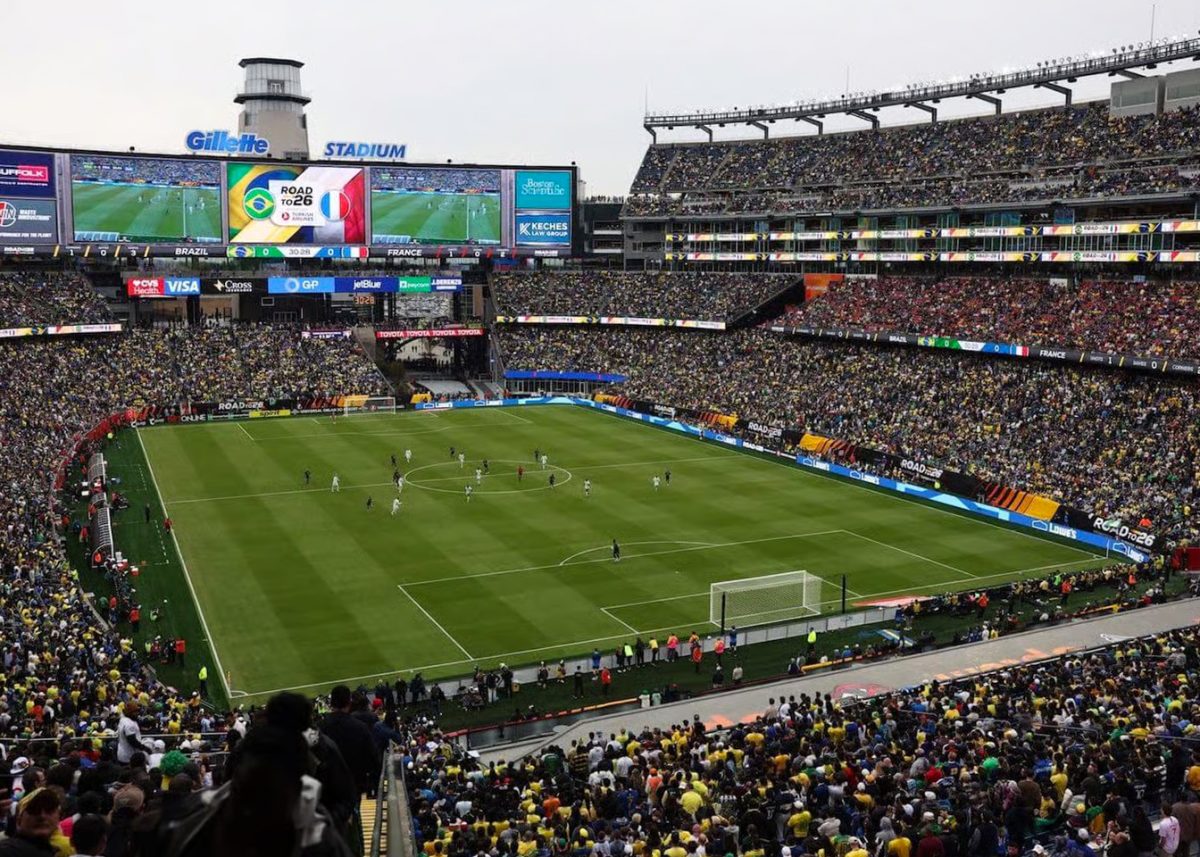
FIFA crowd fills Gillette Stadium to watch international-level soccer. (Source: Ed Mackey)
More to Discover