
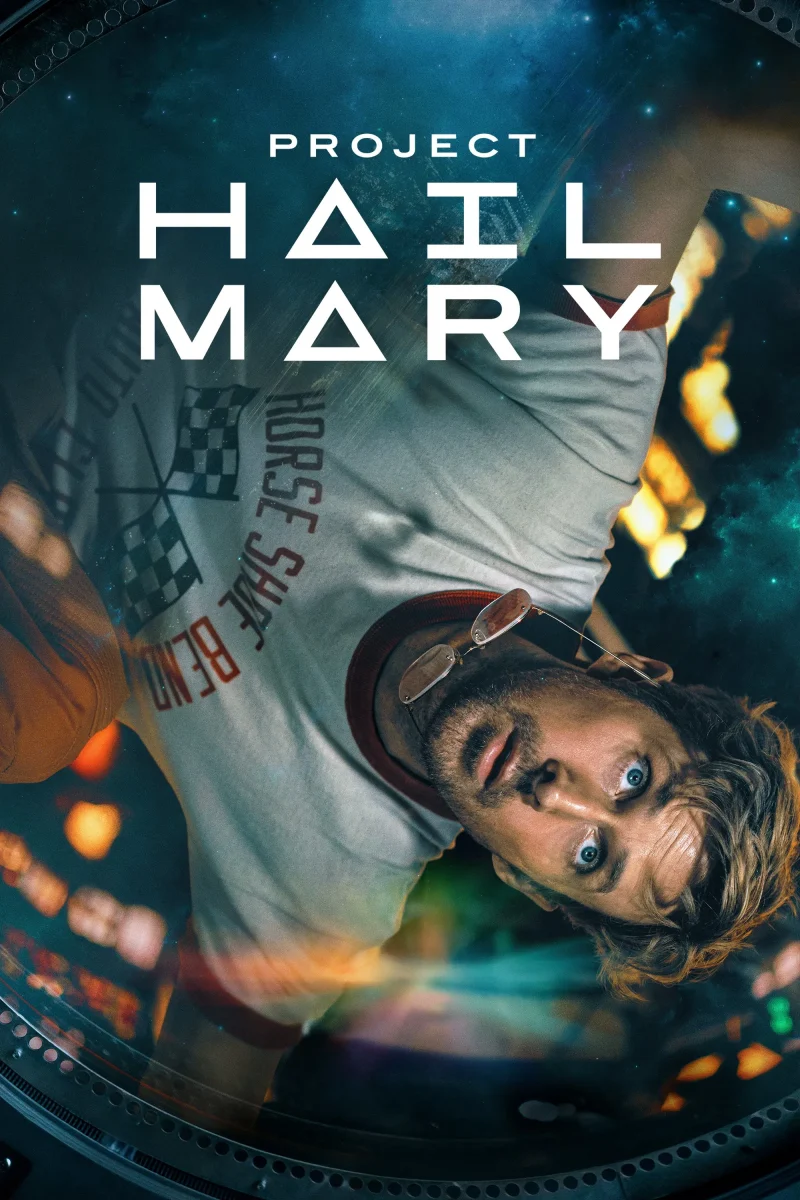
Project Hail Mary, based on a book of the same name by Andy Weir, was released on March 20 and is directed by Phil Lord and Chris Miller. It garnered acclaim from both critics and audiences, receiving a 95 percent and a 96 percent respectively on Rotten Tomatoes.
The film follows Ryland Grace (Ryan Gosling), who loses his memory after a coma. He is sent into space to save earth, which is cooling down due to astrophage, a mysterious living organism. Gosling’s performance as Grace stands out in particular as he strays away from his regular edgy tough guy or lover-boy acts and instead plays a geeky, charismatic teacher-turned-scientist who is making the best of his situation.
As the film progresses, Grace regains his memory and works to find a solution to the astrophage problem while also making friends with a rock-shaped alien, which he aptly names Rocky (James Ortiz).
When asked about what he thought of the movie, John Collins (III) highlights the chemistry between the characters, expressing that “the characters are absolutely where this movie rips. The main duo works well together, and the supporting cast helps to further Grace’s development.” The bond between Rocky and Grace forms the emotional crux of the film and will have the audience laughing at Rocky’s charmingly broken text-to-speech English and sassy diva energy, as well as bawling at the heartbreaking scenes.
To further enhance the bond between the two, Rocky was completely puppeteered, rather than being made using computer-generated imagery — the standard affair for most sci-fi movies. When asked about it in an interview, Gosling elaborates on his experience working with a puppet, explaining, “the whole idea of […] having a puppet to work on set with was part of the magic of the film. […] It’s kind of alive, which is […] something that usually has to be so carefully planned.”
The cinematography especially stood out to John Clougherty (III), who comments, “I thought that the cinematography was out of this world (pun-intended). […] The colorfulness and quality of some scenes alongside the creativity of the setting caught me off guard with their beauty.”
The movie shares lots of similarities to Weir’s other film adaptation, The Martian, which was released about a decade prior. Both share similar plot structures of scientists stranded in a sci-fi setting and needing to solve a larger-than-life problem.
Both films also base their scenes off of real science. The Martian includes accurate shelters on Mars and uses a real National Aeronautics and Space Administration rover in order to communicate between Mars and Earth. In Project Hail Mary, the locations of Tau Ceti, 40 Eridani and Adrian are real places that were adapted to contain fictional elements. Consistencies between this fantasy world and Earth help ground the film in reality and immerse the audience in the fantasy it attempts to create.
Categories:
Project Hail Mary: Grace and Rocky Save Theaters
May 5, 2026
(Source: Amazon MGM Studios)
More to Discover