On January 7, Boston Latin School hosted a Holocaust speaker event in the Seevak Room for students in the Facing History and Ourselves course.
During this event, students heard from a second generation Holocaust survivor who shared personal perspectives and artifacts from the Holocaust. Facing History and Ourselves teacher Ms. Paula Bowles invited guest speaker Dr. Alan Stern, the son of a Bergen-Belsen survivor, to speak. Ms. Bowles organized this event through the Facing History and Ourselves parent organization as an introduction to the class’s unit on Maus, a novel about the author’s father’s experiences as a Holocaust survivor.
“The numbers are just so massive. You see the statistics, but these are not just statistics; there’s a human being behind every number,” Ms. Bowles explains. Since Dr. Stern has a background as a pediatrician who has spoken at schools before, Ms. Bowles felt he would connect with students easily.
Michael Glazkov (I), a student who attended the event, explains how knowing the history behind the Holocaust allowed him to think about its lasting impact, particularly as future leaders at a school like BLS: “When you see these photos in black and white, it doesn’t seem as real or vivid as real life. And so seeing these objects in person definitely made it a lot more real and serious.”
BLS has previously hosted a Holocaust speaker. Last year, first-generation Holocaust survivor Dr. Irene Butter spoke to AP World History students.
Dr. Butter met with students over Zoom and shared her experience, along with donating copies of her book Shores Beyond Shores: From Holocaust to Hope. BLS AP World History teacher Ms. Cheralyn Pinchem recalls it was a wonderful and meaningful time.
Students shared how this year’s event was impactful because it offered a different perspective. “If you start seeing things through one lens, I think it’s not going to necessarily lead you down the wrong path, but it won’t help you forge your own path to your own beliefs,” says Caela Thompson (II).
As the number of living Holocaust survivors continues to decrease, Ms. Bowles describes the importance of second-generation survivors sharing their parents’ survival stories. She also notes the significance of honoring their legacy and acknowledging generational trauma and healing.
Ms. Bowles concludes, “I think genocide education in general is relevant because times change human nature and human behavior. If we can interrupt those patterns before they reach the stage of genocide, then we are doing a good job.”
Categories:
Remembering the Holocaust
February 22, 2026
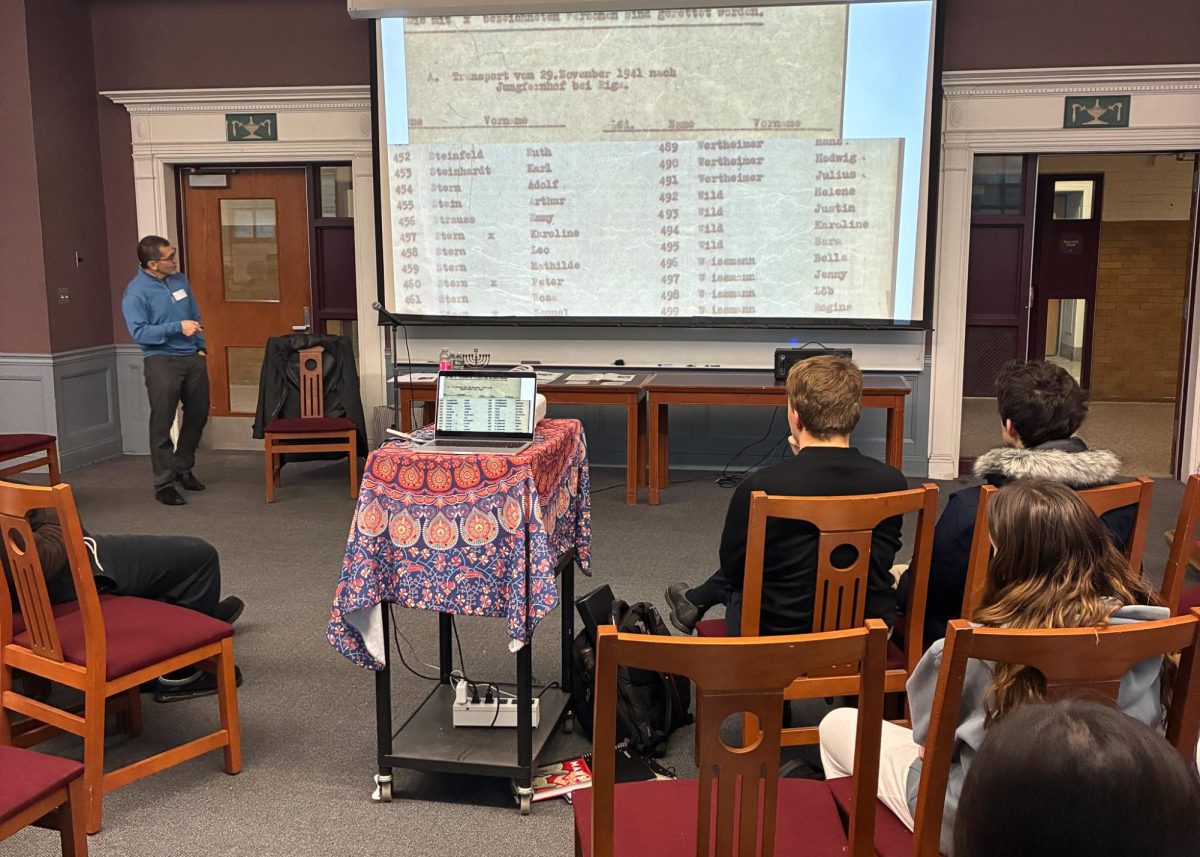
Dr. Alan Stern speaks about his father, a Bergen-Belsen survivor, to BLS students. (Source: Ms. Paula Bowles)
More to Discover