If you walk through the halls of Boston Latin School in the fall, you are likely to hear constant chatter about fantasy football; whether it is player names, team names or students begging for trades — fantasy football is everywhere. Step into the locker rooms and it’s no different. Soccer players, track and field runners and, of course, football players all participate.
Fantasy football, and all fantasy sports, for that matter, are engaging. Every week, there are new games in which players can earn points. Fantasy managers must stay tuned in on the latest team news to decide whether to start, bench or even trade their players. There is intuition, skill and luck, all wrapped into one — a combination every game designer seeks to achieve.
It is no secret why fantasy football has around 50 million participants and is so popular in high schools around America. There is something for everyone, even if you are not a hardcore player or fan. Robert Fitzgibbon (I) says his “favorite part of playing fantasy is looking at statistics and taking risks.”
Between drafting a team, making trades and deciding which players to play, fantasy football is a risky game; the uncertainty, however, makes it fun to play. Risk-taking and statistics are not all that Fitzgibbon and other fantasy players get out of fantasy football. For many, it helps build communities and establish friendships through shared interests.
Fitzgibbon describes how people come together for “each draft to decide the draft order and to do the draft as well as [to create] punishments for finishing last in a league,” and how this leads to fantasy football “always [being] a talking point of many sports conversations in the fall.”
Punishments, or forfeits, are a major part of fantasy football — they provide even more incentive to not lose, aside from the usual banter and trash talk. Forfeits are often agreed upon by the group in advance and can range from grueling physical challenges, like the notorious milk mile, to time-consuming endeavors, like staying in an IHOP for 24 hours.
Fantasy football does not only help build communities, it is also directly related to school topics and issues relevant to all aspects of life. Creating a balanced team must be done with careful consideration, as a good offense may mean a weak defense or vice versa. Trades are conducted frequently between players as they try to assess which players are most valuable for them in an upcoming game that week or over a longer stretch of time.
BLS AP Economics teacher Mr. Patrick Boor believes that fantasy sports have a strong tie to economics because they “involve marginal analysis, where you evaluate the marginal benefit of adding a player to your team against the marginal cost of that addition,” a concept he covers thoroughly in his course. He notes that “there is also a substantial market focused on collecting and analyzing player and team data, which fantasy managers can utilize to construct their rosters.”
The rise in advanced analytics and statistics that has increased over the past decade allows fantasy players to be more thorough and analytical with their decisions and benefits companies who develop these statistics.
As a caution, Mr. Boor adds, “There are serious concerns about how the gambling industry is targeting young people in their ‘pay-to-play’ fantasy games.” As with all things, fantasy sports should be done in moderation and can be harmful if too much time and energy are focused on it.
Fantasy football also offers something unique for aspiring football players hoping to improve their game. These metrics of measuring performance through acquiring points can allow people to perform better.
Xavier King (I), a member of the varsity football team at BLS, also emphasizes that fantasy football is good for community building: “It is a great way to connect with friends and family, especially those I haven’t talked to in a long time.”
Categories:
From Fantasy to Fruition
December 21, 2025
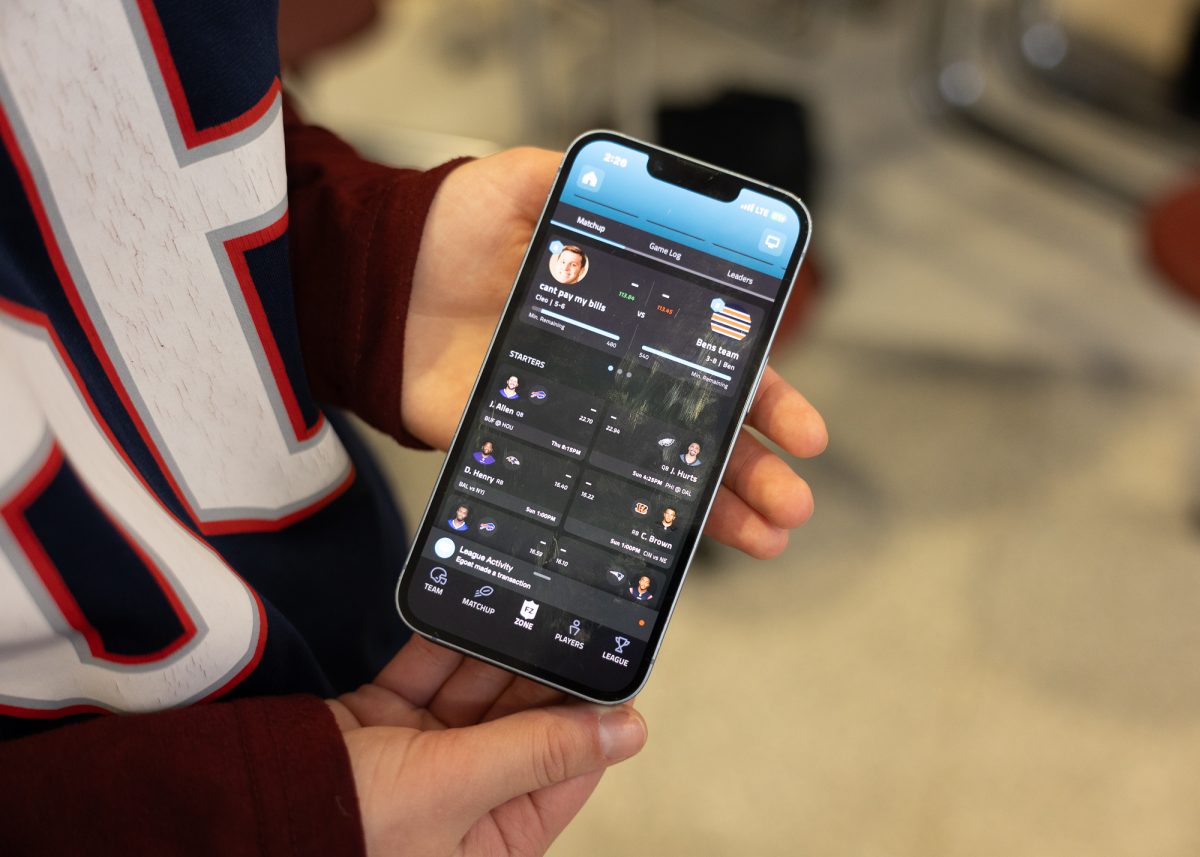
Cleo Barowsky (II) shows off her fantasy football selections. (Source: Sophia Knobel (II))
More to Discover